Timing
Best Time to Visit the Maasai Mara
There's no single "best month" — there's a best month for your priorities. Here's how season affects migration odds, crowds, cost and road conditions, so you can choose deliberately.
Reviewed August 2026 — verify current park fees and rates with our team.
The direct answer
If your main goal is a general wildlife safari with reliable dry weather, late June through October is the most dependable window — dry roads, thinned vegetation that makes animals easier to spot, and (from around July) the Great Migration herds typically present in the northern Mara. If you're chasing lower rates, fewer vehicles and don't mind occasional rain, April and May deliver the best value, though some camps close for maintenance and some roads become difficult after heavy rain. December to March sits in between: mostly dry, warm, and quieter than peak season, but the migration herds are generally in the southern Serengeti, not the Mara, during these months.
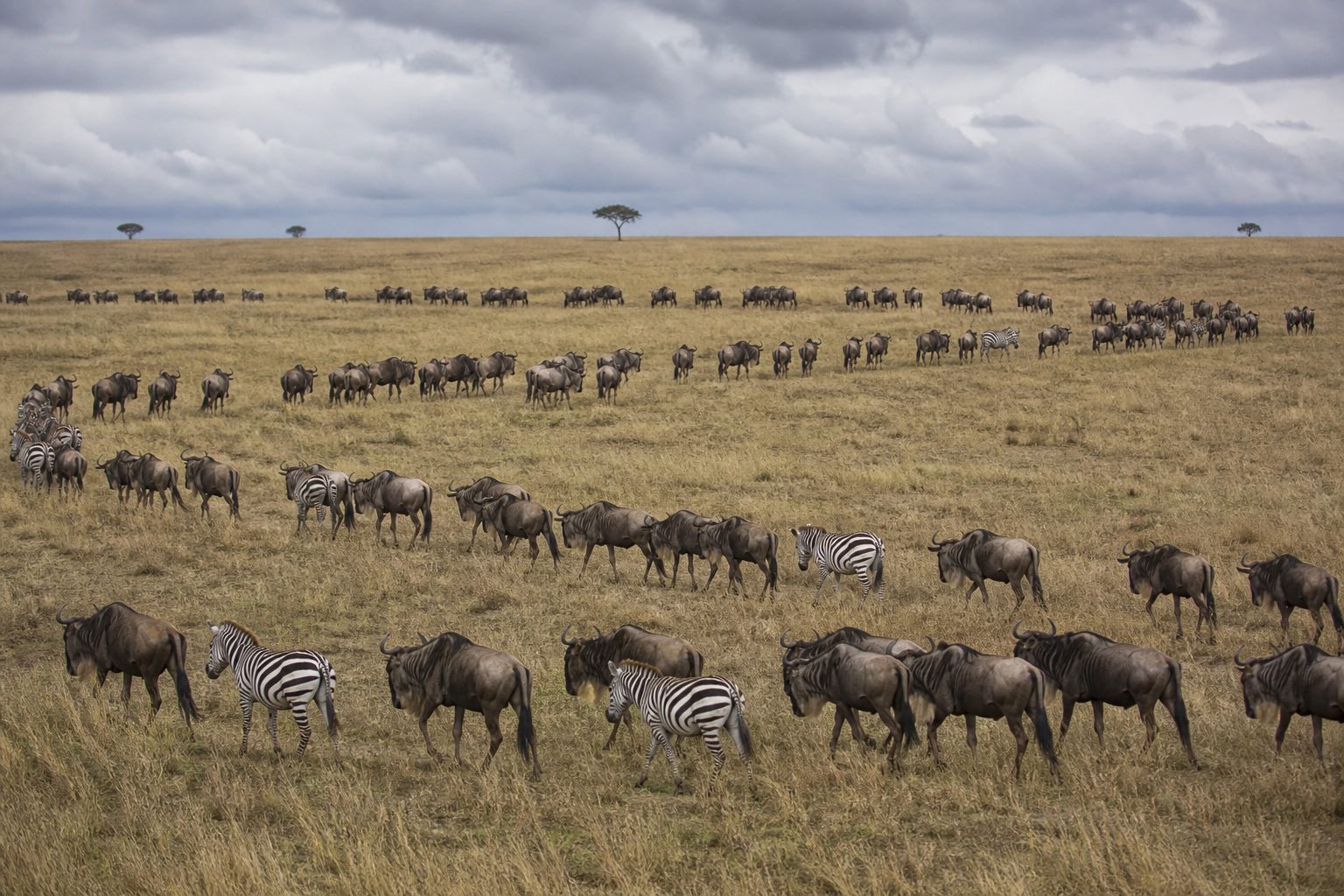
The Great Migration itself is not a single event on a single date. It is a continuous, weather-driven movement of roughly two million wildebeest and zebra around the wider Serengeti-Mara ecosystem. "Migration season" in the Mara refers to the months when herds are typically grazing on the Kenyan side — it does not guarantee a river crossing on any specific day of your trip.
No sighting is ever guaranteed
Wildlife movement, including river crossings, is driven by rainfall and grazing conditions that shift year to year. Treat every date below as a probability, not a promise, and build a flexible itinerary if a specific sighting matters to you.
Season by season
| Season | Months | Conditions | Migration status | Crowds & cost (indicative) |
|---|---|---|---|---|
| Peak dry / migration | Late Jun – Oct | Dry, dusty, cool mornings, easiest driving | Herds typically in the northern Mara; river crossings possible, not guaranteed | Highest crowds and rates of the year |
| Short rains | Nov | Short, sharp afternoon showers; landscape greens up fast | Herds usually moving south, thinning out through the month | Crowds and rates drop noticeably |
| Dry-ish, quieter | Dec – Mar | Warm, mostly dry with occasional short showers | Herds generally in the southern Serengeti, outside the Mara | Moderate, rising again toward February–March |
| Long rains | Apr – May | Heaviest rainfall; some roads become difficult, a few camps close | Herds still in the Serengeti, not the Mara | Lowest crowds and lowest rates — best value window |
| Transition | Jun | Drying out; landscape still relatively green | Herds beginning to move north toward the Mara | Rates and demand start climbing |
Figures are indicative and generalised patterns, not a forecast. Exact timing shifts year to year with rainfall — confirm current conditions with our team before booking around a specific event.
The decision factors that actually matter
- Migration odds: Only relevant if seeing the herds — or specifically a river crossing — is a priority for you. If not, dry-season wildlife viewing is strong from June through March regardless of migration status.
- Crowds: July–October has the most vehicles at popular sightings, especially near river crossing points. Shoulder months (November, April–June) are visibly quieter.
- Cost: Accommodation rates in the Mara are seasonal. Peak months command the highest nightly rates; the long rains (April–May) are typically the cheapest.
- Road conditions: Heavy rain can make some reserve and conservancy roads slow or temporarily impassable in places. This matters more for road transfers and off-road game drives than for fly-in trips.
- Photography light: The green season (December–May) often gives more dramatic skies and fewer dust-haze afternoons than peak dry season.
Recommendations by traveller type
- First-time safari-goers: Almost any month from June to March delivers strong general wildlife viewing. You don't need to chase the migration to have a rewarding first safari.
- Migration and river-crossing chasers: Target August–September and position yourselves in the Mara Triangle or Mara North with flexible days built in — crossings can't be scheduled.
- Budget-conscious travellers: April–May offers the lowest rates of the year, with the trade-off of rain and reduced camp availability.
- Photographers: Consider December–March for greener landscapes and softer light, with noticeably fewer vehicles than peak season.
- Families with young children: Favour drier months (June–March) for more comfortable road transfers and shorter, more predictable drive times.
Common misconceptions
- "The migration happens on one specific date." It doesn't. It's a months-long, weather-driven movement — river crossings can happen repeatedly through the season or barely at all in a given week.
- "Peak season guarantees a crossing." It improves your odds because herds are present, but a crossing on your exact travel dates is never guaranteed.
- "Rainy season means a ruined safari." Wildlife viewing continues year-round. Rain mainly affects road comfort, photography light and camp availability — not whether animals are present.
- "You can book peak season last-minute." July–October camps in popular areas sell out months ahead. If you're set on this window, plan and book early.
Frequently asked questions
Is the Great Migration only visible in July to October?
That's the period when herds are typically present in the Kenyan Mara. For the rest of the year, the migration continues elsewhere in the wider ecosystem, mostly the Serengeti in Tanzania — see our Great Migration guide for the full annual pattern.
What is the single best month to visit?
There isn't one universal answer — it depends on your priority. August–September typically balances migration presence with still-manageable crowds; February–March offers quieter parks with reliable dry weather.
Will rain ruin my safari if I travel in April or May?
Not necessarily. Game drives continue and wildlife is still present, but expect afternoon showers, muddier tracks and some camps closed for maintenance. Rates are also at their lowest, which suits flexible, budget-focused travellers.
Can I time my trip to guarantee a river crossing?
No. Crossings depend on herd movement and river conditions on the day, which no operator can guarantee. Positioning in the Mara Triangle or Mara North during August–September improves your odds, but flexibility helps more than any specific date.
Is December to March a good time to visit?
Yes, for general wildlife viewing. It's mostly dry, warm and quieter than peak season, though the migration herds are usually in the Serengeti rather than the Mara during these months.
Not sure which window fits your trip?
Tell our team your rough travel dates and priorities, and they'll tell you honestly what to expect for that window.
Plan My SafariRelated reading
Found your window? Let's plan around it.
Share your travel dates and priorities — we'll turn them into a clear, pre-filled WhatsApp message to our team.