
Mara Guide · Migration
Understanding the Great Migration
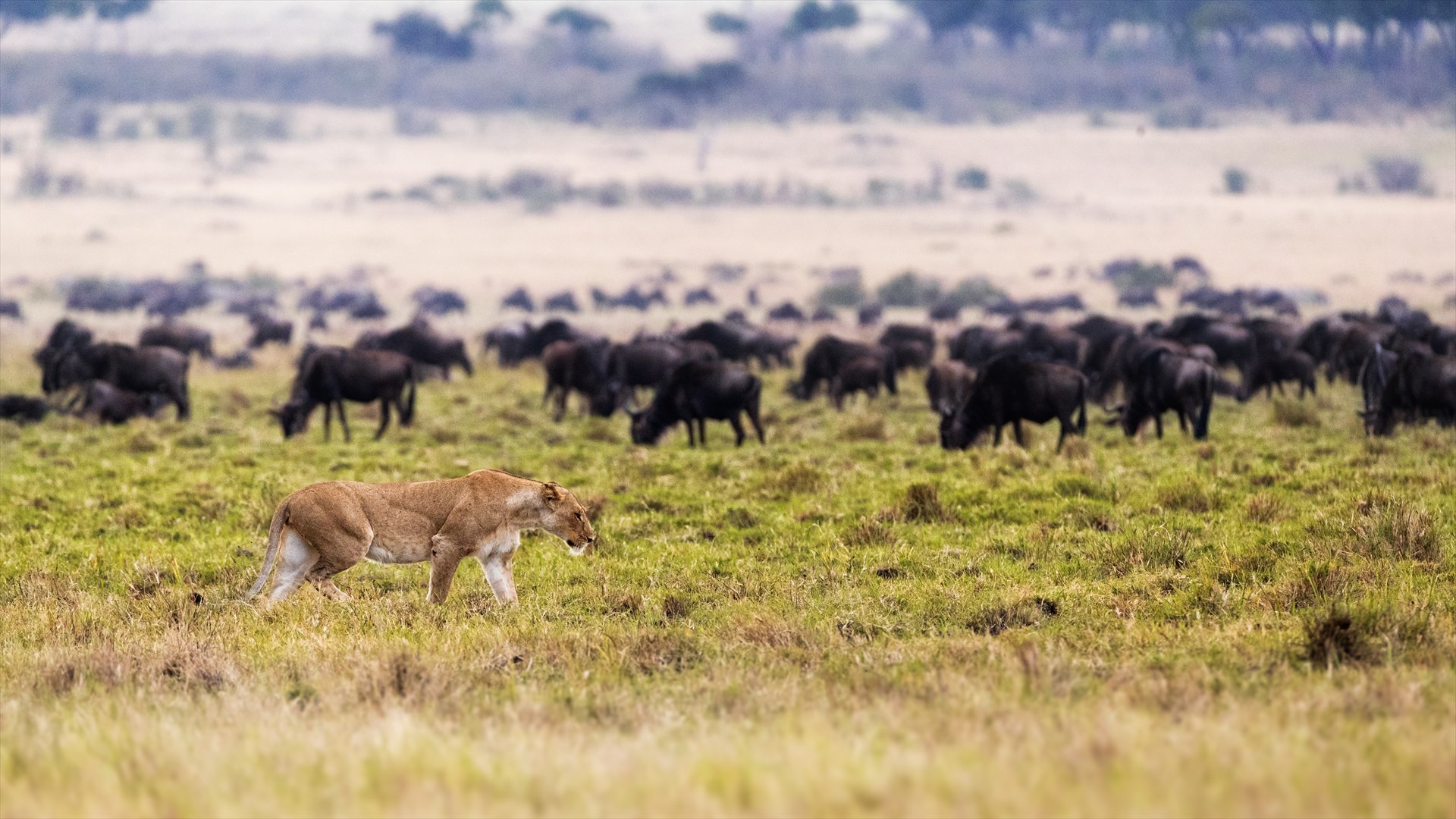
The dust rises first — then the noise, a rumble that builds as the front of the herd reaches the riverbank. Roughly 1.5 million wildebeest and zebra move through the Maasai Mara for months at a time, typically July through October. Follow the wider movement month by month, without treating any crossing as predictable.
The short answer
The migration itself is reliable: the herds are genuinely present in the Mara ecosystem for months at a time, typically July through October, so simply travelling within that window means you'll very likely see large numbers of wildebeest and zebra. What isn't predictable is a specific river crossing at a specific place on a specific day — that depends on the herds, not a schedule.
What the migration actually is
The Great Migration is the year-round movement of an estimated 1.5 million-plus wildebeest, alongside several hundred thousand zebra and gazelle, across the connected Serengeti-Mara ecosystem that spans northern Tanzania and southwestern Kenya. The herds aren't migrating to the Maasai Mara specifically — they're following rainfall, which produces fresh grazing, across a roughly circular route that happens to pass through the Mara for part of the year.
There's no fence, no single route and no fixed timetable. The herds respond to where rain has recently fallen, so the route and pace shift from year to year. What's consistent is the general pattern — southern Serengeti in the early part of the year, a push north through the central and western Serengeti, and a Mara-ward move roughly around July, though the exact week varies.
Month-by-month: the general pattern
Treat this as a rough guide to typical behaviour, not a forecast. Herd movement in any given year can run two to six weeks earlier or later than "typical," and can be uneven — some groups cross into the Mara while others linger in the Serengeti.
| Months | General pattern | Typically in |
|---|---|---|
| January – March | Calving season on the southern Serengeti's short-grass plains; hundreds of thousands of calves born within a few weeks, drawing predators. | Southern Serengeti, Tanzania |
| April – May | Herds begin moving north and west as the plains dry out, often described as the "long rains" trek. Movement is gradual and spread out. | Central/Western Serengeti |
| June | Herds continue north, frequently pausing to graze; some groups reach the Grumeti River area and stage crossings there. | Western/Northern Serengeti |
| July – August | Herds typically begin arriving in the Mara ecosystem, crossing the Sand and Mara Rivers. This is when the first, often dramatic, Mara River crossings usually start — timing can vary by several weeks either way. | Northern Serengeti into the Maasai Mara |
| September – October | Peak period for herds being present across the Mara and Mara Triangle, with repeated back-and-forth river crossings as animals respond to localised rain and grazing. | Maasai Mara / Mara Triangle |
| November | Herds usually begin moving south again with the onset of the short rains, heading back toward the Serengeti. | Maasai Mara into Northern/Central Serengeti |
| December | Herds continue south, generally arriving back on the southern plains ahead of the next calving season. | Central/Southern Serengeti |
This table describes typical, historically observed patterns rather than a forecast for any specific year.
What a river crossing actually is
A river crossing happens when a mass of wildebeest, usually pushed by pressure from animals behind them, commits to swimming across the Mara or Sand River to reach grazing on the other side. It's one of the most sought-after sights in African wildlife travel, and also one of the least predictable.
- Herds decide, not schedules. A crossing can happen at dawn, midday, or not at all for several days in a row, even during "peak" migration weeks.
- Location shifts. Herds cross at whichever point on the river has the right conditions and pressure that day — guides reposition based on where herds are gathering, but can't force a crossing.
- Multiple attempts are common. Herds often approach the riverbank, hesitate, and retreat — sometimes repeatedly — building tension before a crossing actually breaks.
- The area matters. Staying in the Mara Triangle or northern conservancies during July–October keeps you close to where the herds gather and cross.
If a river crossing matters most to you
Tell us that directly, and the itinerary can allow several consecutive days near the river — enough time to follow the herds rather than depend on a single drive.
"It's one of the most sought-after sights in African wildlife travel, and also one of the least predictable."
River Crossings
Wildlife worth valuing outside migration season
November through June — outside the peak migration window — is often underrated. The Maasai Mara has resident wildlife year-round, and several factors make the quieter months genuinely worthwhile rather than a consolation option:
- Resident predators. Lion, leopard, cheetah and hyena live in the Mara year-round and don't migrate — sightings of predators are not tied to the wildebeest calendar.
- Calving and birdlife. The green, post-rain landscape (roughly November–May) brings newborn plains game, migratory birds, and dramatically fewer vehicles at sightings.
- Lower rates and quieter camps. Outside July–October, camps are less full and rates are typically lower — see our cost guide for how season affects pricing.
- Better light and landscape photography. Green season scenery and dramatic cloud cover often photograph better than the dustier, crowded peak months — see the photography guide.
For a full month-by-month breakdown of weather, crowds and value across the whole year, see Best Time to Visit the Maasai Mara.
Common misconceptions
- "The migration only happens in the Mara." The herds spend most of the year in Tanzania's Serengeti — the Mara hosts them for roughly a third to a half of the year, mainly July–October.
- "If I book July–October, I'll see a crossing." Those months may bring the herds into the Mara, but the animals — not the calendar — decide whether a crossing happens on a particular day.
- "The migration is one big herd moving together." It's more accurate to think of it as many groups moving somewhat independently, which is part of why crossings happen at unpredictable times and locations.
Ready to plan a trip timed around the migration? Our Great Migration safari page covers itinerary length and stays in the Mara Triangle and northern conservancies.
Reviewed August 2026 — migration timing patterns are historically typical; confirm current herd positions with our team closer to your travel dates.
FAQ
Common questions about the Great Migration
What is the best month to see the Great Migration in the Maasai Mara?
August through October is when herds are typically most present in the Mara, with the highest historical frequency of river crossings. September is often cited as the statistical sweet spot, but arrival timing shifts by several weeks year to year depending on rainfall, so no single month is guaranteed.
Can I guarantee I'll see a river crossing?
No responsible operator can guarantee a river crossing on a specific date — the herds decide when and where to cross, not a schedule. Staying for several days near the Mara or Sand River during peak months (roughly July–October) gives the movement time to unfold. See what decides a crossing for the full picture.
Does the migration happen in the Serengeti or the Maasai Mara?
Both — they're the same connected ecosystem across the Kenya-Tanzania border. The herds spend most of the year in the Serengeti (Tanzania) and typically move into the Maasai Mara (Kenya) for roughly July through October. See our Maasai Mara vs Serengeti comparison for more on choosing between them.
Is it worth visiting the Maasai Mara outside migration season?
Yes. Resident predators, plains game and birdlife are present year-round, and the November–June months typically bring lower rates, fewer vehicles at sightings, and greener scenery. It's a genuinely different trip, not a lesser one.
How many wildebeest take part in the Great Migration?
Estimates commonly cited put the wildebeest population involved at over 1.5 million, alongside several hundred thousand zebra and smaller numbers of gazelle. Exact figures vary by survey and year, so treat any single number as an approximation.
Planning a migration-timed trip?
Tell us your travel window and whether river crossings are a priority. We’ll shape the route and length of stay around the herds’ seasonal movement.