
Areas · Mara Triangle
Mara Triangle
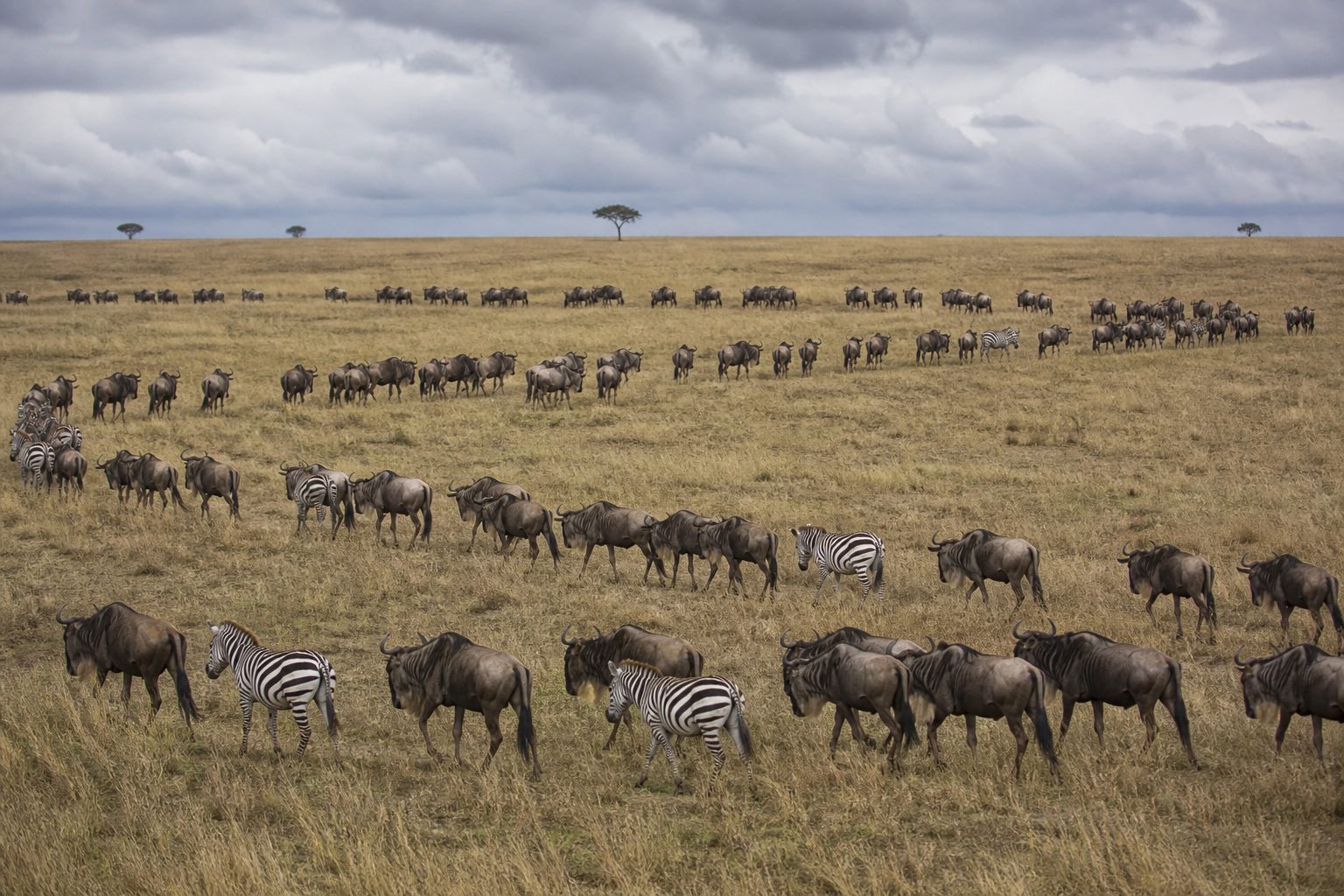
The western portion of the Maasai Mara National Reserve, separated from the rest of the reserve by the Mara River — generally well-managed, and home to the river-crossing points that define the Great Migration.
Overview
Part of the reserve, managed on its own terms
The Mara Triangle is part of the Maasai Mara National Reserve, but it's managed under a conservation trust model that's widely regarded as well-organized — road maintenance and anti-poaching efforts in particular are often cited as a strength of this arrangement.
What makes it distinct
Roads, density and the river
- Generally well-maintained roads relative to some other parts of the reserve, which matters more than it sounds during and after the rains.
- Vehicle density can be lower than the busiest central reserve sightings, though it still rises sharply during peak migration months.
- Borders the section of the Mara River where the well-known wildebeest river crossings take place, typically between July and October.
- Reserve rules still apply here — no night drives, no off-road driving, no walking safaris.
Who it suits
Migration-focused and first-time travellers
- Travellers whose primary goal is witnessing the migration or a river crossing.
- First-timers who want reserve-level game density without the day-visitor congestion that can build up at some central-reserve sightings.
- Travellers comfortable with standard reserve rules rather than conservancy-style flexibility.
How it compares
Mara Triangle vs other areas
Compared with the central Maasai Mara, the Triangle generally offers lower vehicle density and better-maintained roads, but a longer transfer and fewer accommodation choices. Compared with a conservancy like Naboisho, it doesn't allow night drives, walking safaris or off-road access — but it does border the river crossings, which conservancies further east and north don't.
Close to the Mara River crossings
The Triangle sits directly along the stretch of river where crossings happen, so a stay here during July–October puts you closer to the action than almost anywhere else in the ecosystem.
Getting there
Access & transport
The Mara Triangle sits west of the Mara River and is typically reached via the Oloololo Gate, either by road from Nairobi (a longer transfer than the central reserve gates, and one that can be affected by river levels and road conditions) or by flying into a nearby airstrip. See our road vs fly-in comparison for how that balance plays out for this specific area.
Where to stay
Accommodation tier
The Triangle has a smaller number of camps and lodges than the central reserve, spanning mid-range to luxury tier, generally without the budget campsite options found further east. Bed numbers here are more controlled than in the busiest parts of the central reserve, which is part of why density stays comparatively lower.
Relevant safaris
Itineraries built around this area
Seasonal
Great Migration Safari
Several days in the Triangle, close to the Mara River and the herds’ seasonal route.
Style
Luxury Maasai Mara Safari
Premium camps and a quieter pace, including Triangle options in migration season.
Transport
Fly-in Maasai Mara Safari
Skip the longer road transfer to the Triangle with a scheduled flight.
Common questions
Mara Triangle — FAQ
Is the Mara Triangle part of the Maasai Mara?
Yes — it's the western portion of the Maasai Mara National Reserve, managed separately from the central and eastern reserve but subject to the same overall reserve rules.
Are river crossings guaranteed if I stay in the Triangle?
No. Staying here during peak migration months (roughly July–October) keeps you near the Mara River, but the herds move on their own timing and nothing can be guaranteed.
Can I combine the Mara Triangle with a conservancy?
Yes, this is a common structure on trips of five nights or more — a few nights in the Triangle focused on the migration, then a few nights in a conservancy such as Naboisho for night drives and a quieter pace.
Planning a Mara Triangle safari?
Tell our team your travel window on WhatsApp and they'll help you weigh the real migration timing.