Where to stay
Reserve vs Conservancy: Where Should You Stay in the Maasai Mara?
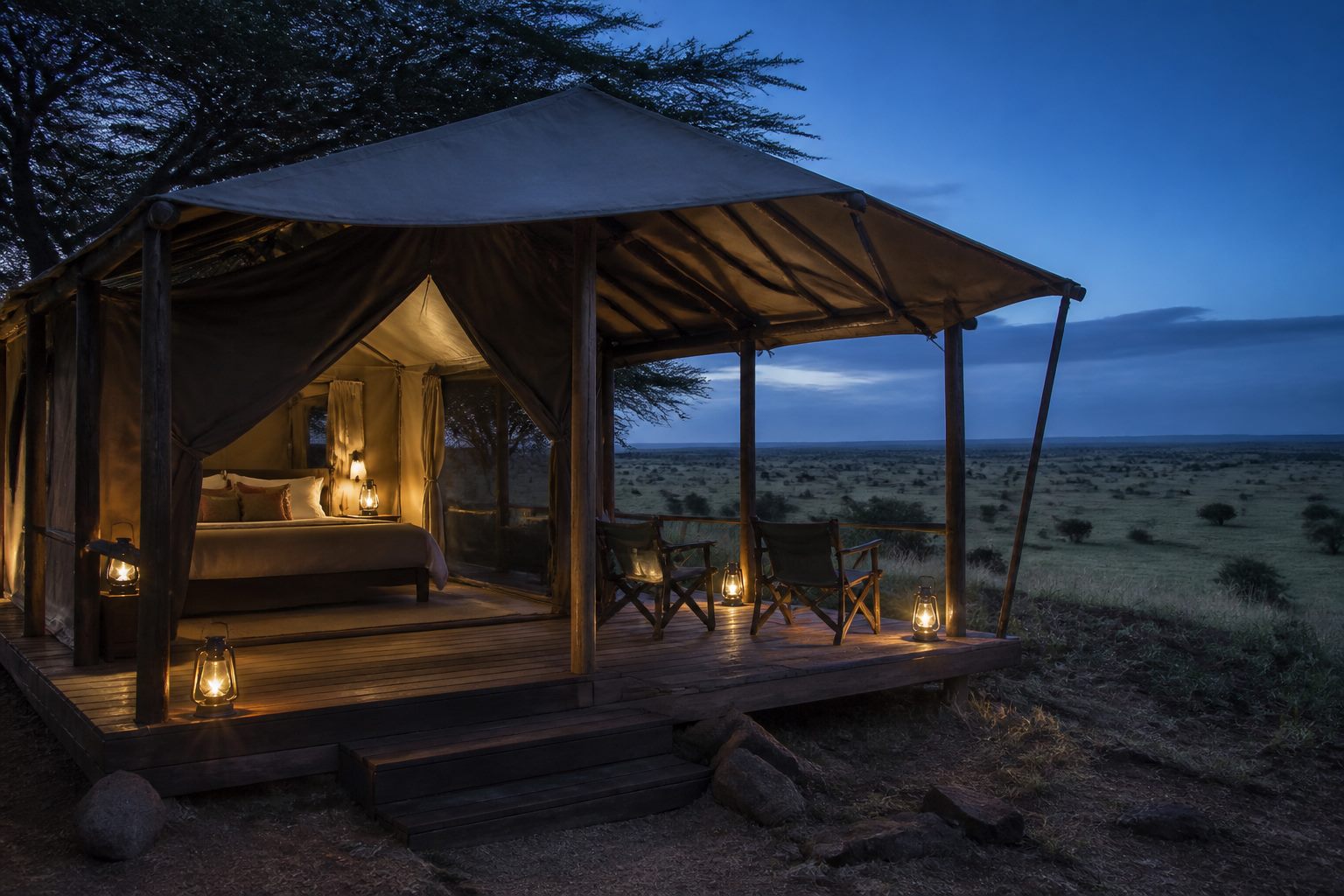
Inside the reserve, game drives follow the great open plains and the Mara River. Across the private conservancies, fewer vehicles and activities after dark create another rhythm. The camp matters; the land around it matters more.
The direct answer
Stay in the government-run Maasai Mara Game Reserve for the classic, most accessible reserve scenery and the areas most associated with migration river crossings. Stay in one of the private conservancies bordering the reserve for lower vehicle density, a more exclusive feel, and — at many properties — activities like night drives and walking safaris that the reserve itself doesn't generally permit. Travellers who can afford it often combine a few nights in each.
What makes the reserve different from a conservancy
According to the Mara Conservancy's official site and the UNESCO World Heritage tentative-list submission for the Greater Maasai Mara Ecosystem, the Maasai Mara Game Reserve covers around 1,510 km² in Narok County, split into two sectors — the Narok Sector and the Mara Triangle Sector. That same submission describes the "Greater Maasai Mara Ecosystem" as the reserve plus 23 neighbouring conservancies.
A common point of confusion is worth clearing up here: the Mara Triangle is not a private conservancy. It's a sector of the statutory reserve itself, managed on behalf of Narok County by Mara Conservancy Ltd, which began operating there on 12 June 2001 under a management agreement signed the previous month. Because it remains part of the reserve, its entry rules and fee structure follow reserve norms rather than conservancy norms — see our full Mara Triangle guide for that sector specifically.
The Mara Triangle's official site lists Mara Serena Safari Lodge and Little Governors' Camp as the accommodation inside its boundary.
Private conservancies sit on community or privately owned land bordering the reserve. Landowners lease that land into a conservancy trust, which caps the number of beds and vehicles permitted inside it and channels a share of tourism revenue back to those landowners — a structure that generally keeps sightings less crowded than in the busiest parts of the reserve.
Reserve vs conservancy, side by side
| Factor | Maasai Mara Reserve | Private conservancies |
|---|---|---|
| Public access | Open to any visitor paying the gate fee — no landowner vetting | Generally limited to guests staying at a lodge or camp within that conservancy |
| Vehicle density | Can be high at popular sightings, especially in peak season and near river-crossing points | Bed and vehicle numbers are typically capped by each conservancy's landowner agreements |
| Permitted activities | Standard day and night-time drives on established tracks; off-road driving, night drives and walking safaris are generally not permitted | Many conservancies permit night drives, walking safaris and off-road driving — rules vary by property, so confirm with your camp |
| Fees | Government-set entry fees, charged per person per day (indicative — verify current rates with Roar Safaris) | Conservancy fees set by each conservancy's management, often bundled into the camp rate (indicative — verify with Roar Safaris) |
| Best for | Classic reserve scenery, migration river-crossing areas, first-time Mara visitors | Lower-density sightings, flexible activities, travellers prioritising exclusivity |
Reviewed August 2026 — rules, fees and accommodation lists above vary by individual property and conservancy and change without much notice; confirm current specifics with Roar Safaris before booking.
"Conservancy" isn't one single product
Each conservancy has its own landowner agreement, bed cap and house rules — a night drive allowed at one property may not be allowed at its neighbour. Always confirm activity rules for the specific camp you're considering, not the conservancy in general.
"The Mara Triangle is not a private conservancy. It's a sector of the statutory reserve itself, managed on behalf of Narok County by Mara Conservancy Ltd."
What Makes the Reserve Different
Named conservancies around the reserve
The UNESCO tentative-list submission for the Greater Maasai Mara Ecosystem names 23 conservancies bordering the reserve. A few of the better-known ones:
- Naboisho: according to Naboisho's own site, more than 700 Maasai landowners participate in dedicating land to wildlife protection here — one of the larger community partnerships among Mara conservancies. See our Naboisho area guide.
- Olare Motorogi: a long-established conservancy northeast of the reserve, generally associated with a strong predator-sighting reputation among its exclusive-use camps. See our Olare Motorogi area guide.
- Mara North: one of the larger conservancies bordering the reserve's northern boundary, often positioned as a quieter alternative to the busiest reserve sectors. See our Mara North area guide.
- Ol Kinyei, Olderkesi and Siana: smaller conservancies on the reserve's eastern side, each with its own bed cap and house rules.
- Enonkishu, Mara Lemek and Nashulai: community-led conservancies further north, with their own conservation and access arrangements.
- Olarro North, Olarro South and Pardamat: additional named conservancies within the wider ecosystem, each worth asking about if a specific camp draws you there.
Ask Roar Safaris which one actually fits your priorities — they'll match the conservancy to your dates, budget and interests rather than a name you've seen online.
Which fits you
Reserve, conservancy, or both
There is no universally better option. The right setting depends on the safari you want to wake up to.
Reserve is ideal for
- Public-reserve access without landowner restrictions
- Classic, most-photographed Mara scenery
- Migration river-crossing areas, including the Mara Triangle sector
- First-time visitors who want the iconic Mara first
Conservancy is ideal for
- Lower vehicle density at sightings
- Activities many reserves don't permit — night drives, walking, off-roading, where allowed
- A more exclusive, lower-key camp experience
- Travellers who've done a reserve safari before
Combine both
- A few nights in a conservancy, then a few nights in the reserve
- Often the strongest itinerary for those who can afford it
- Exclusivity and flexible activities first, iconic reserve scenery after
- Ask Roar Safaris to build this as a single connected trip
Frequently asked questions
Is the Mara Triangle a conservancy?
No. It's a sector of the statutory Maasai Mara Game Reserve, managed by Mara Conservancy Ltd on behalf of Narok County since 2001. It follows reserve rules and fee structures, not conservancy ones. See our Mara Triangle guide.
Do conservancies allow night game drives and walking safaris?
Many do, but it varies by individual conservancy and camp — it's not a blanket rule across all 23. Always confirm with your specific property. The reserve itself generally does not permit these activities.
Are conservancy fees included in the nightly camp rate?
Sometimes, sometimes not — it depends on the camp and package. Always ask what's included in a specific quote rather than assuming, since fee structures are set by each conservancy's management and can change.
Can I visit a conservancy without staying there?
Generally, access is limited to guests of a lodge or camp within that conservancy, unlike the reserve which is open to any visitor who pays the gate fee. Check with Roar Safaris if you're hoping to visit a conservancy on a day trip.
Which is better for seeing the migration?
Migration river crossings are most closely associated with the reserve, including its Mara Triangle sector — see our Mara Triangle guide for more. Conservancies can still offer excellent general wildlife viewing during migration months, just typically away from the crossing points themselves.
Still deciding where to stay?
Tell our team your dates, priorities and budget, and they'll recommend reserve, conservancy or a combination — matched to your actual trip.
Compare Reserve & ConservancyRelated reading
Ready to decide where to stay?
Share your dates, group and priorities — we'll turn them into a clear, pre-filled WhatsApp message to our team.