
Plan Your Trip · Migration Timing
August vs September in the Maasai Mara
By the last week of August, the grass on the open plains is cropped down to stubble and camps run at their fullest all season. A month later, the same plains often still hold big herds — only spread wider, less hurried, lingering longer near water. Both months sit inside the reliable July–October migration window. The real difference between them is texture, not certainty, and it changes what kind of trip you get.
Reviewed August 2026 — verify current herd positions and camp availability with our team before booking.
The direct answer
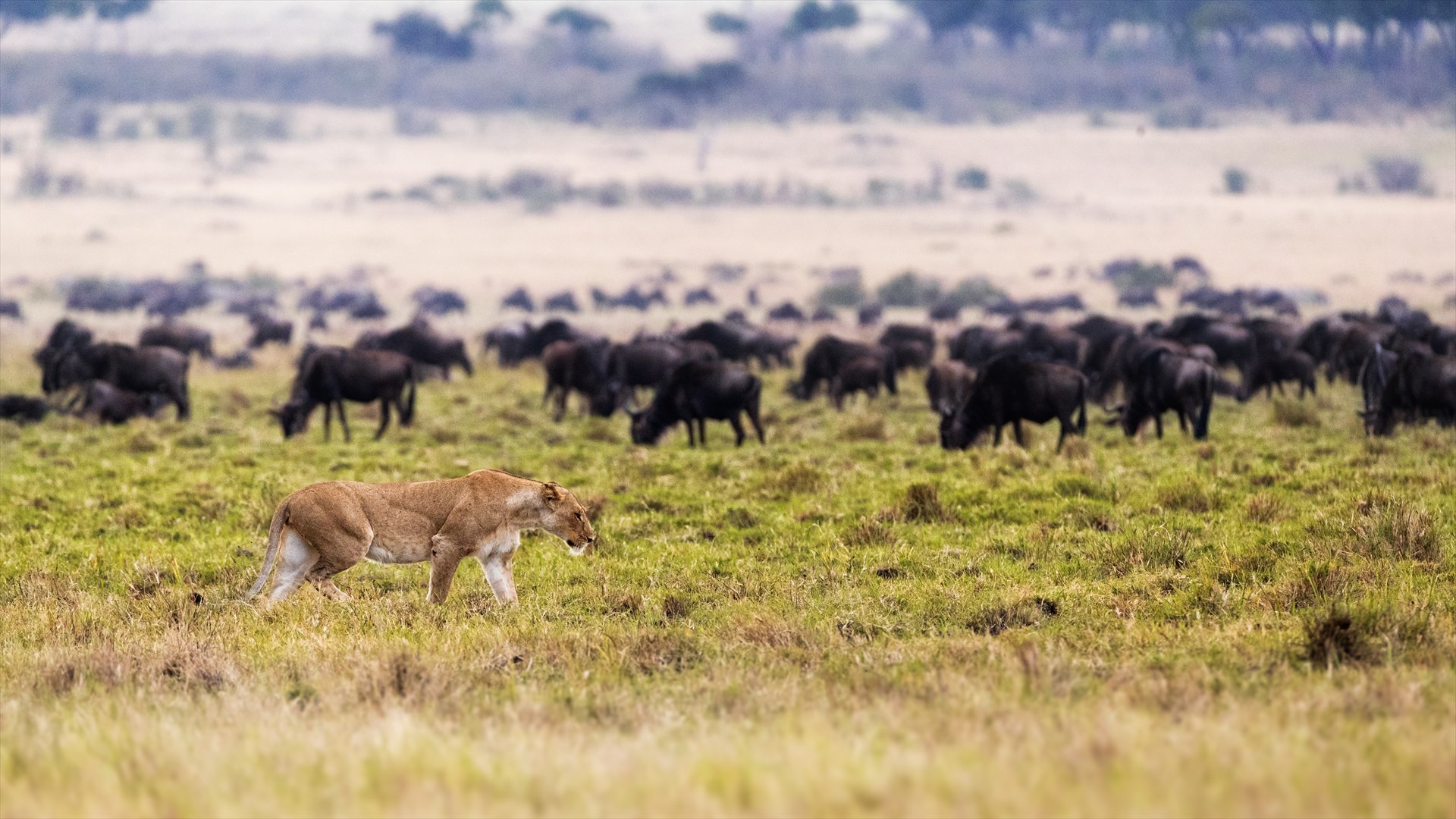
Neither month "wins." August and September both sit firmly inside the July–October window when Great Migration herds are reliably present in the Mara ecosystem, and both have historically produced some of the year's most dramatic river crossings. August tends to be the busier, more urgent month — herds are arriving in volume, camps fill first, and vehicle counts at popular crossing points climb quickly. September usually feels more settled: herds that arrived in August are often still present and spread more widely across the reserve and northern conservancies, with crowds only slightly eased from August's peak.
September is often cited as the statistical high point for river-crossing frequency, historically — but August sees plenty of crossings too, particularly from mid-month as the first big groups reach the Mara and Sand Rivers. Both months see herds present; the difference between them is one of degree and atmosphere, not a binary of "one has crossings and one doesn't." If you have to choose, base it on your tolerance for crowds and how far ahead you can book, not on a belief that one month guarantees more sightings.
Quick take
Want the busier, higher-energy start of the season with the most vehicles on the road? Lean August. Prefer herds already settled and slightly more breathing room at sightings? Lean September. Either way, you're travelling in peak season and should book well ahead.
August vs September, side by side
The table below compares the two months across the factors that actually change your trip — not just "is the migration here," since herds are typically present in both.
| Factor | August | September |
|---|---|---|
| Weather | Dry, cool mornings, dust builds steadily through the month; negligible rain. | Similarly dry and often the driest stretch of the year, with slightly warmer afternoons. |
| Crowd levels | Highest of the year at well-known crossing points as herds first arrive in numbers; camps typically full. | Still busy, but the initial rush has usually eased; marginally more room at sightings than August. |
| Typical herd behaviour | Herds arriving in the Mara ecosystem in large numbers, with frequent crossings as animals push north across the Sand and Mara Rivers. | Often the month with the highest historical frequency of crossings, as herds settle across the Mara Triangle and move back and forth chasing fresh grazing. |
| Booking lead time | Camps in the Mara Triangle and northern conservancies fill early; among the first weeks of peak season to sell out. | Just as tight — the best-positioned camps are often booked out by travellers who plan a full year ahead. |
This comparison describes typical, historically observed patterns. It is not a prediction for any specific year.
"The real difference between them is texture, not certainty, and it changes what kind of trip you get."
August vs September
What stays the same either way
Whichever month you pick, a few things don't change:
- Both are peak season. Expect the year's highest camp rates and the busiest reserve and conservancy roads, in August or September alike.
- Both need advance booking. The best-positioned camps near the Mara Triangle and Mara North fill from both directions of the calendar — travellers targeting August book early in the year, and September fills almost as fast right behind it.
- Neither guarantees a crossing. A specific river crossing at a specific place on a specific day depends on the herds, not the calendar. Staying in the Mara Triangle or a northern conservancy during either month keeps you near the river country, but no operator can promise a sighting on a set date.
For the full month-by-month pattern across the whole migration season, see our Great Migration guide. For how these two months compare against the rest of the year — including the quieter, lower-cost months — see Best Time to Visit the Maasai Mara.
FAQ
Common questions about August and September
Is September really better than August for river crossings?
September is often cited as having the highest historical frequency of crossings, but August sees plenty too, especially from mid-month onward. Both months have herds present in the Mara — treat September as a slight statistical edge, not a guarantee.
Are camps more expensive in August or September?
Both sit within peak-season rates, which are the highest of the year. Camps generally don't price August and September differently from each other — the premium is for the July–October window as a whole, not a specific month within it.
Which month has fewer vehicles at sightings?
September typically feels marginally calmer than August, since the initial rush of arriving herds — and the vehicles chasing them — has usually eased by then. The difference is noticeable but modest; both months are busy compared with the rest of the year.
Can I guarantee a crossing by choosing the "right" month?
No — herds decide when and where to cross, not the calendar. Staying near the Mara Triangle or Mara North in August or September places you close to their seasonal route, but no month or camp can promise a specific sighting. See can you guarantee a river crossing? for more.
How far ahead should I book for either month?
As early as you can. The best-positioned camps near the river in both months are typically the first to sell out across the whole year, well before the quieter shoulder months fill up.
Weighing August against September?
Tell us your rough dates and priorities — we'll help you decide which month actually fits your trip, and where to stay for it.