Where to Stay · Tented Camps
Maasai Mara Tented Camps
Zip the canvas shut and the bush is still right there — inches of fabric between your bed and whatever's moving past camp after dark. That closeness is the whole point of a tented stay, and it holds true whether you're in a mobile budget camp or a permanent luxury one.
What a tented camp means
Canvas, not concrete
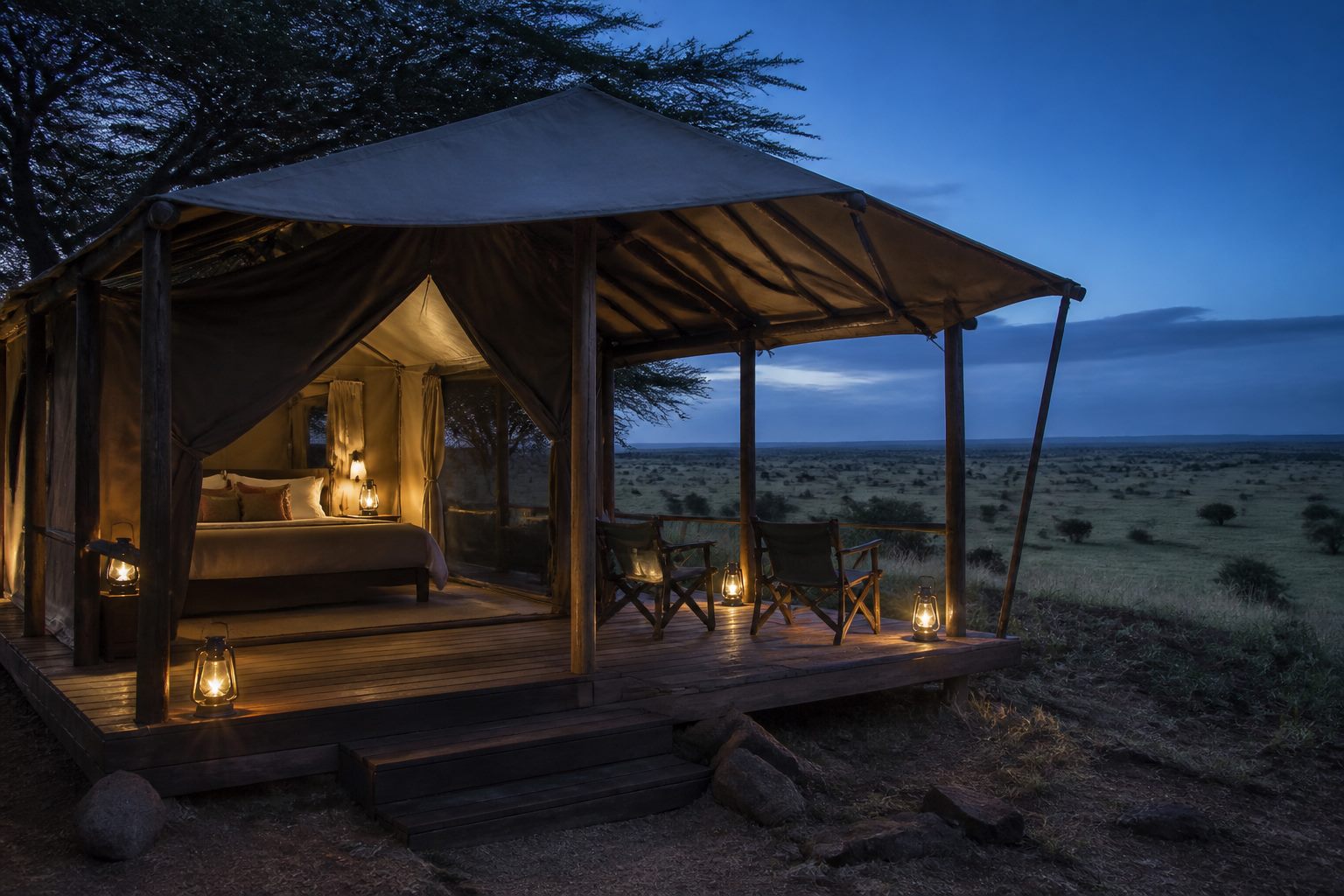
A Mara tented camp is typically a framed canvas structure pitched on a raised wooden or stone platform, with zip-up canvas walls rather than solid brick.
At mid-to-luxury tier, en-suite bathrooms are standard — flush toilets and hot showers, sometimes solar-heated. At the more basic or mobile end (seasonal camps that relocate with the migration), facilities can be simpler: bucket showers, shared ablution blocks, or a smaller footprint generally.
Most tents open onto a veranda facing a river, plain or waterhole, and the experience trades solid walls for a genuine closeness to the bush — you'll hear it after dark far more than you would in a lodge room, and camps typically escort guests between tents and the dining area at night as a result.
Tented camps also tend to have fewer units per site than lodges, particularly in the conservancies, where a low bed-density model keeps camp sizes deliberately small. See our lodges guide for the built-structure alternative.
The range
From mobile budget camps to permanent luxury
Mobile / seasonal camps
Smaller, simpler canvas structures that relocate with the migration or close in the low season. Generally the most affordable tented option.
Fixed mid-range camps
Permanent platforms with en-suite bathrooms and reliable power, sitting between budget and luxury on both price and finish.
Permanent luxury camps
Larger tents with premium fittings, sometimes a private plunge pool, most common in the private conservancies.
Who it suits
The classic safari-camp atmosphere
Tented camps suit travellers who want the traditional safari feel, honeymooners looking for a romantic, intimate setting, and photographers who value being close to camp activity and staff who know the local wildlife patterns well.
They're also, in practice, the default in the private conservancies — Naboisho, Olare Motorogi and Mara North are almost entirely tented-camp accommodation, because their low bed-density agreements favour smaller, lighter-footprint structures.
Worth asking about
Generator or solar power hours, and whether night drives or walking safaris are included in the rate — both vary camp to camp, especially in the conservancies.
Common questions
Tented camps — FAQ
Are tented camps safe to stay in with wildlife nearby?
Reputable camps operate with trained staff who escort guests after dark and brief every guest on camp safety on arrival. Wildlife does sometimes pass through camps, which is part of the experience, but camps are set up and staffed with that in mind.
Do all tented camps have en-suite bathrooms?
Most mid-to-luxury tented camps do. Some budget or mobile camps use shared or simpler facilities instead — always confirm the specific setup for the camp you're considering.
Are tented camps cold at night?
It can get cool, particularly June to August. Most camps provide hot water bottles and extra blankets on request; some higher-tier camps have heating. Check our packing guide for what to bring.
Looking for the right tented camp?
Tell our team your dates, budget and priorities on WhatsApp, and they'll match you to currently-available camps.