
From the Mara
The Night Is Part of the Safari
After the final drive, the Mara does not disappear. It changes register.
The night is part of the safari.
After the final drive
The return to camp does not end the day in the way a hotel lobby might. Dust settles on the vehicle. Someone asks about dinner. The sky lowers, and the sounds beyond camp begin to carry differently.
A safari night is not a performance. It is the land continuing around you while the light is gone.
From the Mara
Canvas changes the sound
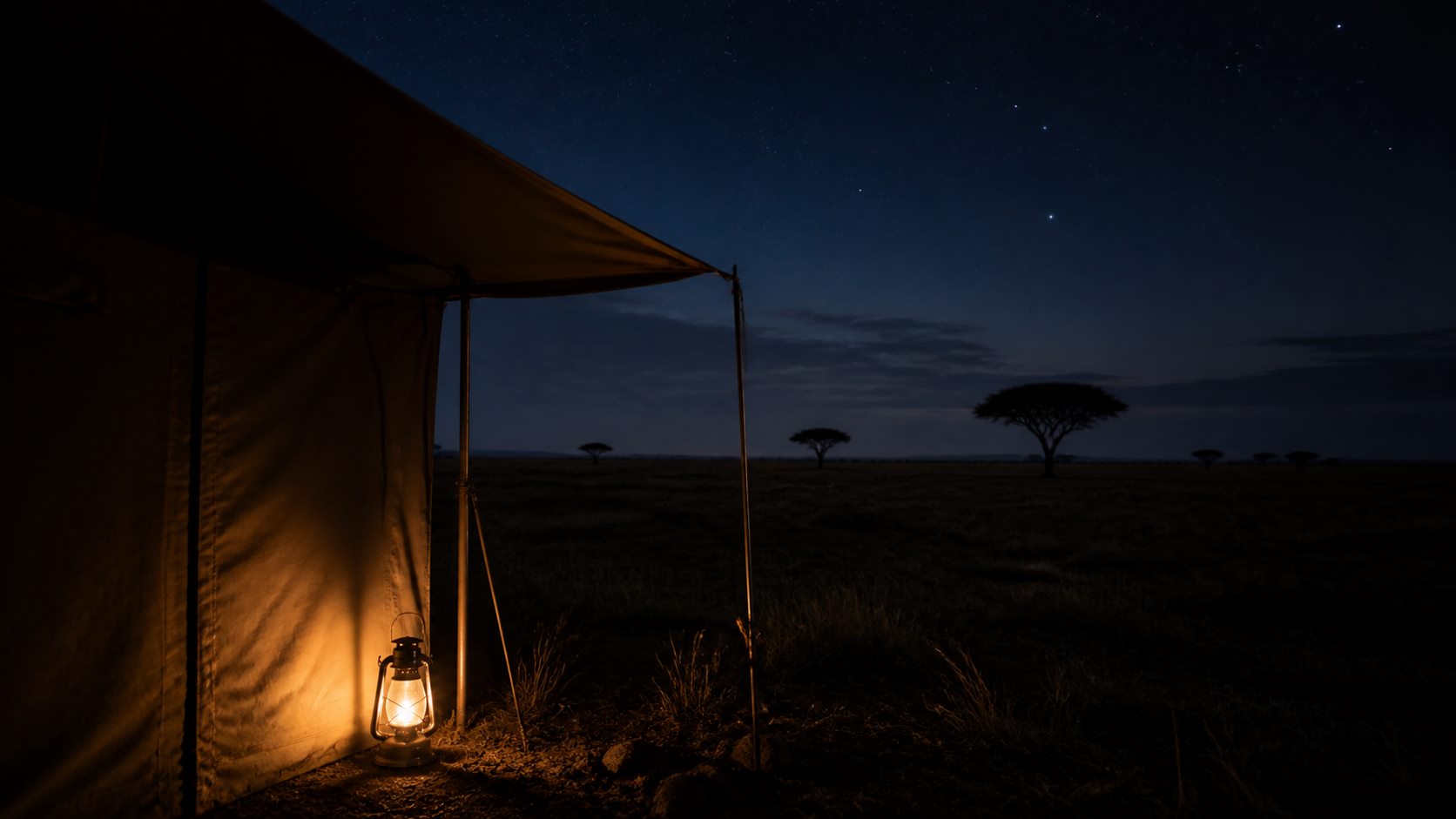
Under canvas, small sounds matter more. Wind moves against fabric. A zipper, a footstep, a call from the dark, the soft instruction to wait for an escort if camp rules require it.
These details are not inconveniences. They are reminders that the safari is not sealed away from the place it came to see.
Under canvas, the Mara is close even when you cannot see it.
Before dawn returns
The night eventually turns back toward the first drive: clothes laid out, batteries charged, coffee promised, the sense that the day has not so much ended as paused.
For travellers choosing where to stay, the camps guide explains the accommodation side. This article is about the hours that make canvas feel alive.
Evening changes the scale
In daylight, the plains can feel wide and readable. At night, the world becomes closer. A path to the tent, the edge of a lantern, the sound beyond the canvas and the instruction to wait for an escort all narrow attention.
That narrower scale is not a reduction of safari. It is another part of it. The land is still there, but the traveller understands it through sound, routine and the small rituals of camp.
The next morning begins at night
Safari mornings are easier when the night has been quietly prepared: camera batteries charging, clothes within reach, boots where they can be found, a warm layer ready for the first cup of coffee.
These are modest details, but they make the first drive feel less abrupt. The night holds the day in place until the horizon comes back.
Publication note: This article uses the existing Maasai Mara Safari editorial-desk research base and avoids date-specific operational claims that require current private-trip verification.