
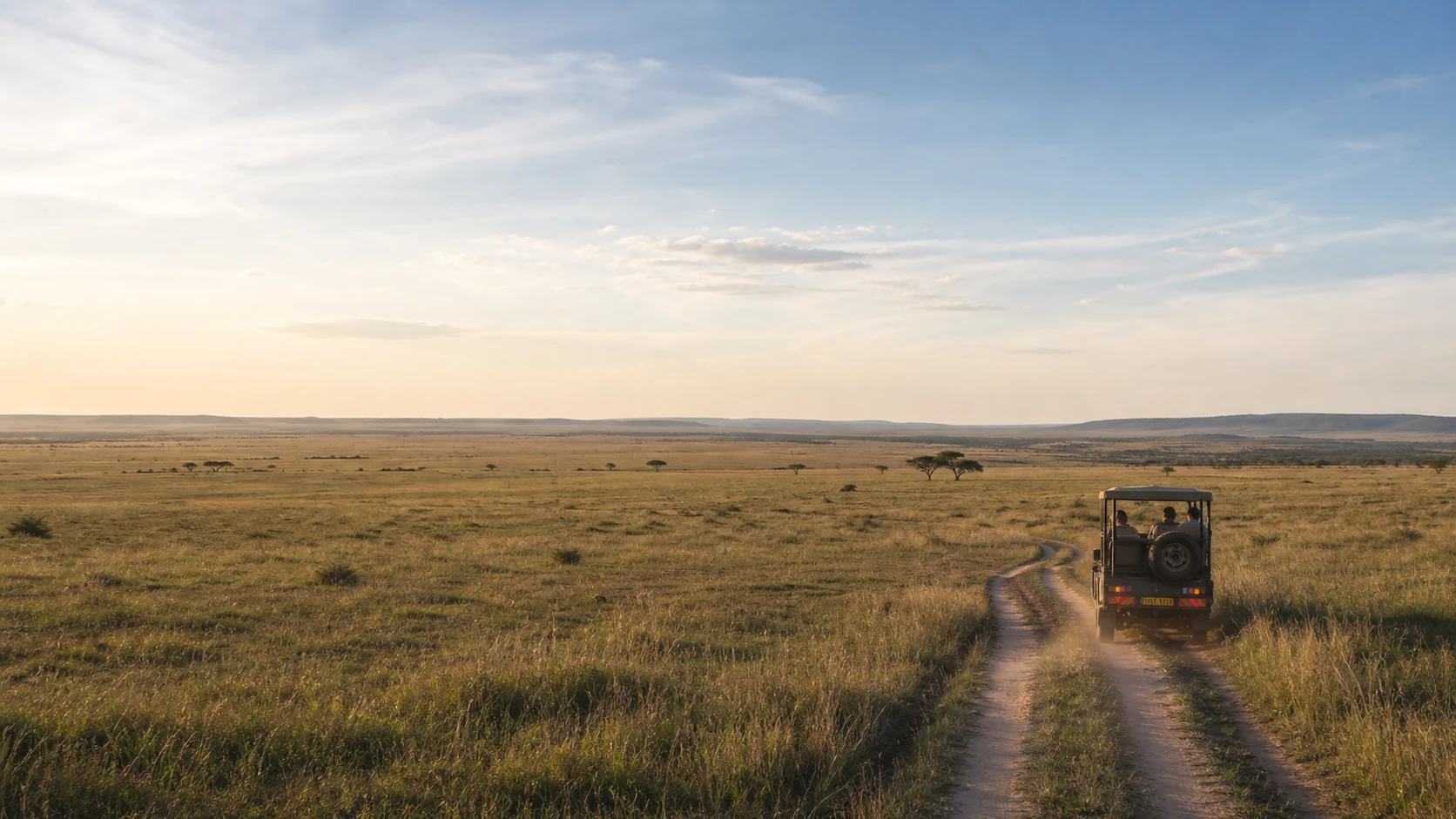
Safari design
3 Days or 4 Days in the Maasai Mara? What the Extra Night Changes
It is not only another night under canvas. It is another dawn, another unhurried drive and a final day that does not have to begin with leaving.
Three days can make a real safari. Four days changes the way the time feels once you are there.
The distinction is easiest to see in the edges of the trip. On a three-day stay, arrival and departure carry more weight. There is still room for early starts, a proper game drive and the pleasure of returning to camp after dark, but the itinerary has less slack around the transfer.
Add one more night and the Mara stops being only the place between the journey in and the journey out. A second full morning opens up. An afternoon drive can end slowly. The last morning need not compete so directly with packing and departure.
Three days: the first rhythm
A well-shaped three-day safari works particularly well when the transfers are realistic. It can hold an arrival drive, at least one full day in the reserve or conservancy, and a final early outing before the journey back. It is compact, but not necessarily rushed.
The trade is that every movement matters. A long road transfer can take a meaningful part of the first or final day; a flight can return more of that time to the Mara itself. The broader road-versus-fly guide explains the transport choices in full.
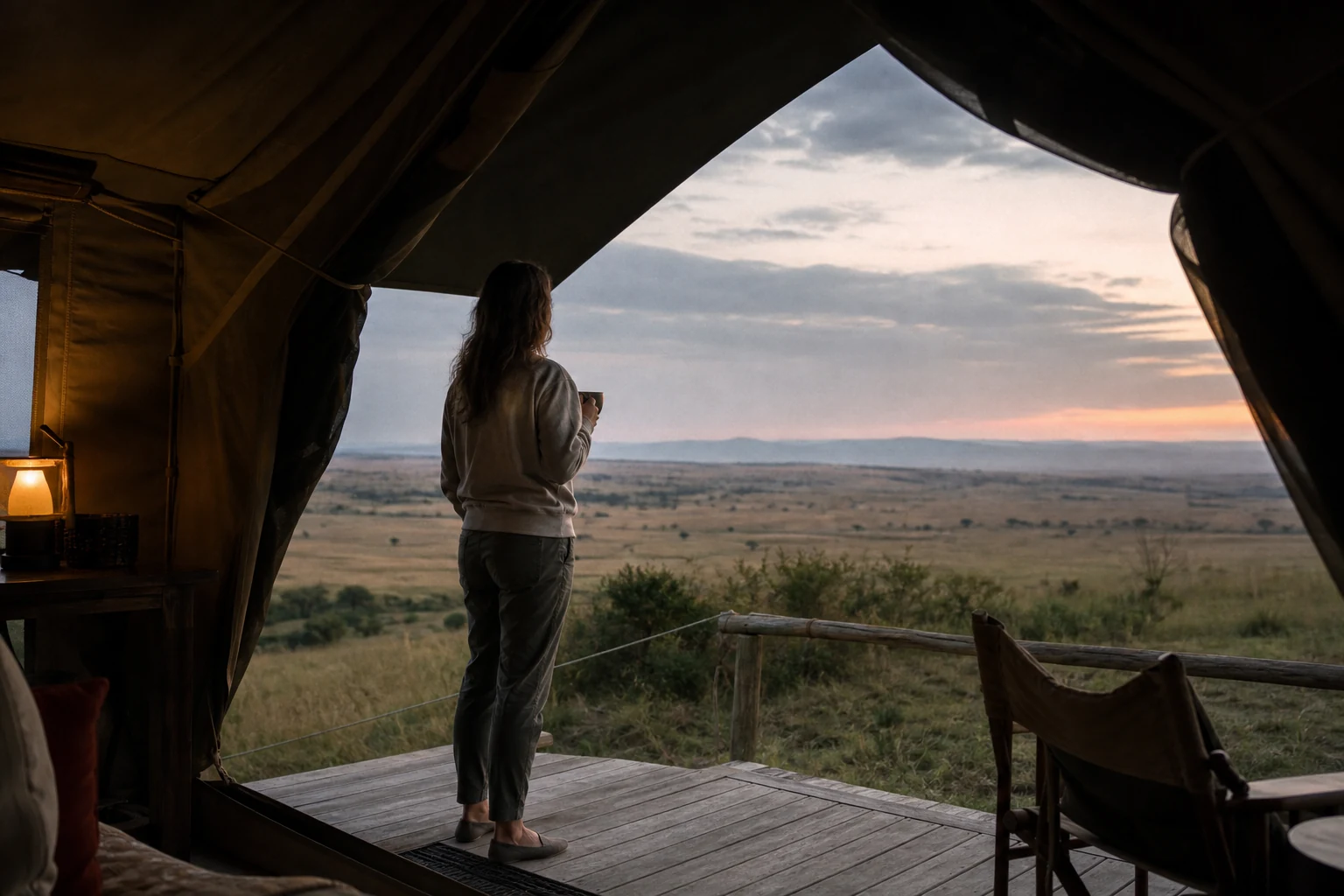
The extra morning
Four days: a little more room
The value of a fourth day is not a longer checklist. It is time for the safari to find its own pace: a second dawn when the previous drive was already full, a later return to camp, a quiet middle of the day that does not feel borrowed from departure.
For photographers, families and travellers who dislike moving on too quickly, that margin can be the point. It allows a plan to absorb a change in weather, a lingering sighting or simply the wish to do less.
At a glance
The difference is mostly in the edges
| Moment | Three days | Four days |
|---|---|---|
| Arrival | Often sets the pace for the whole stay | Important, but less likely to define the trip |
| Full safari time | One full day can carry much of the experience | A second full day gives the rhythm more space |
| Final morning | Usually shares attention with departure | Can be a final game drive without the same pressure |
| Best for | A focused trip with practical transfers | A slower stay, families and travellers who value time in camp |
The way the day settles
Safari is partly made of pauses. The pause at first light, before the vehicle starts. The pause when a guide switches off the engine. The pause at camp when the grass and canvas take over from the road. A fourth day does not promise a particular animal or moment. It simply makes more room for the moments a safari naturally contains.
The complete duration framework remains in how many days to spend in the Maasai Mara. For a three- or four-day trip, the next practical question is the shape of the transfer — then whether a three-day safari or a four-day safari better matches the time you want on the plains.